Animators need to tell a story without words, to create "pantomime" animation. The art of pantomime is that the audience should understand the story being told without words. In the example above, by Joshua Reynolds, Joshua tackles the "Phone Booth" exercise, in which the animator must tell the story of a phone call silently, just using body language and expressions, communicating to the audience what the character is thinking and feeling. Start by thinking about the story you want to tell. Then, act it out, draw some thumbnail sketches, and pose out the shot. Make sure the character poses tell the story clearly.

Showing posts with label Planning animation. Show all posts
Showing posts with label Planning animation. Show all posts
Monday, 26 February 2024

Friday, 22 April 2022
How To Create Thumbnails for Animation
How do you create thumbnail sketches for character animation? Learning how to create thumbnail sketches is a very important skill, even for animators who don't draw well, because thumbnail sketches are an important tool for planning animation. Even 3D animators who aren't that comfortable with drawing are encouraged to have a go at the thumbnailing process, because it is so valuable for planning character animation. Watch the video above to see how to create simple but expressive thumbnail sketches for this month's "11 Second Club".
Monday, 11 April 2022
Why Live Action Reference Needs Exaggeration
 |
| Edward Muybridge |
Animators should always remember that our job is to give a performance. This means using live action to create realistic, believable animation, but then going further, pushing it, and exaggerating the results. Good animation is a caricature of life, not a copy of it.
Live action reference is a very powerful tool, one which I have myself relied upon countless times on many feature films to get my shot completed on time. It is a technique used by animators all over the world.
Monday, 28 February 2022
Nine Ways to Create a Great Animation Pose
How do you create a great pose in animation? Creating great poses is a necessary skill for all animators to learn. In the video above, I suggest nine ways that an animator can create a great pose - the key starting point for a great acting scene.
Sunday, 27 February 2022
Body Language for Animators
Body language is as important as spoken language, and just as important for animators to learn. Animators are actors (with a pencil or a mouse) and we must understand how body language can be used to communicate emotion, and how to create great poses in our work. A great pose should communicate what the character is thinking and feeling. In the 13 minute video above, I explore some of the basic principles of body language and how these can be applied to character animation.
Saturday, 19 February 2022
How to Fix Floaty Animation Based on Live Action Reference
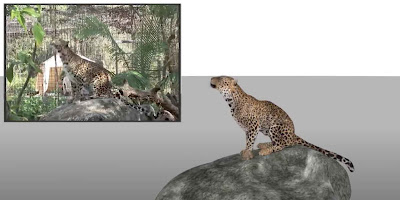 |
| Leopard Animation by Daniel Amor |
But one of the dangers of using live action is that, if you follow it too closely, the final animation can be floaty and weightless.
Monday, 17 January 2022
Why Animators Need Stepped Curves
 |
| Stepped Curves in Maya |
However, for most character acting shots, and any shot which is basically pose-to-pose, Stepped Curves are a much more powerful tool, and one which it is very important for animators to master.
Wednesday, 14 October 2020
Why Animators Should Keep it Short

It is almost always much better to do a great job on a short piece of animation than to struggle to complete something long and complex.
Animation takes a long time to get right, so allow yourself the luxury of being able to add all the bells and whistles and still make your deadline. Keep it short and sweet.
Wednesday, 12 August 2020
Why Animators Need Thumbnail Sketches

The single most important skill that animators learn at Animation Apprentice is how to develop a reliable workflow for animation, so that our students can tackle any animation task with confidence.
One of the key tools our students learn is how to thumbnail their work. Thumbnail sketches are quick, expressive, simple drawings that are used to plan the action and tell the story of the shot in a few simple clear poses.
Tuesday, 14 July 2020
How to Block Out a Pantomime Shot
 |
| Phone Call Blocking by Mark Masters |
In the case of pantomime animation, we teach a workflow that is reliable and dependable, one which will get your shots approved on time, with minimal aggravation.
The secret of success lies, as ever, in the planning. Plan your work properly and you won't go wrong.
Sunday, 24 November 2019
Medusa Thumbnails by Milt Kahl
 |
| Thumbnails by Milt Kahl |
In a recent blog post, Andreas has uncovered the thumbnail sketches that legendary animator Milt Kahl used to animate his classic scene of Madame Medusa, the villainess of The Rescuers, removing her false eyelashes in the mirror.
The scene is one of Milt's best; a shot I often show in class to illustrate the importance of great acting choices in character animation.
Monday, 25 March 2019
Animate a "Take" Reaction with "Monty"
 |
| Animate a "take" with Monty |
A reaction shot is where animators first start to get to grips with acting and performance. Just like live-action actors, animated characters on a screen must listen - and react.
Wednesday, 27 February 2019
Why Animators Should Do Facial Expressions 1st

You might think to yourself "I'll save time by blocking out the main poses, and then work on the facial expressions later", but the danger with this approach is that you might never get around to doing the facial expressions at all, and your animation will be lifeless and flat.
One of the early lessons I learned at Blue Sky Studios on "Robots" back in 2003 was how to block out the character's main facial expression from the very beginning, thus determining the main acting beats in the shot.
What is the character thinking and feeling? This is a choice you should make at the very start.
Wednesday, 31 October 2018
Monday, 23 July 2018
Pixar Animation Workflow
 |
| Incredibles 2 |
Royce is an experienced character animator whose credits include Brave, Coco, Robots and Inside Out.
Understanding how to plan your work is one of the key parts of the animator's skill set. Every animator has their own unique approach, and it's important to develop a workflow that you can rely on to get your shots approved without too much stress.
Wednesday, 6 June 2018
Thumbnailing Mrs Copperbottom from "Robots"
 |
| Robots - Mrs Copperbottom |
You wouldn't build a building without architectural plans. And you shouldn't start animating a shot without a clear plan of where you are going.
Tuesday, 1 May 2018
How to Block out and Plan Creature Animation
This short video ten minute explains how to block out and plan an animal or creature animation shot. What do animators mean by "blocking"? We mean the process of establishing the main key poses in a shot, using stepped curves (i.e., single poses without any smooth transitions), so that we can test whether or not the shot will work. Having a good, organised workflow is an essential part of the animator's toolkit. Long before you start making key poses in Maya, you want to plan the shot out in your head, on video, with thumbnail sketches and/or storyboards.
Sunday, 25 March 2018
Thumbnailing Boog from "Open Season"
Learning to thumbnail animation is one of the hardest skills for junior animators to master, especially if they are not comfortable with drawing. But being able to do rough thumbnail sketches is an important part of the animator's toolkit, and in the video above I demonstrate how I approached thumbnailing a shot I animated on "Open Season". The trick is to create a plan for your animation so that, long before you start creating poses in Maya, you already have the shot figured out in your head.
Thursday, 14 September 2017
Animation Insider's eBook - Free from Squeeze
 |
| Animation Insider's Ebook - free from Squeeze! |
This free digital download describes the workflow of talented animators such as Mike Nguyen, Victor Navone and Jason Ryan.
It 's a remarkable insight into how experienced animators approach a shot, and very useful for students looking to develop their own animation workflow.
Sunday, 17 May 2015
Planning Animation - Fagin Thumbnails by Glen Keane
 |
| Oliver and Company |
The secret of doing great work is to thumbnail - that is to say, to plan out your work with sketches and scribbles - drawings which create a kind of road map of where you want to go.
In the video below, I show how master animator Glen Keane approaches the business of doing animation thumbnails.
Subscribe to:
Posts (Atom)